
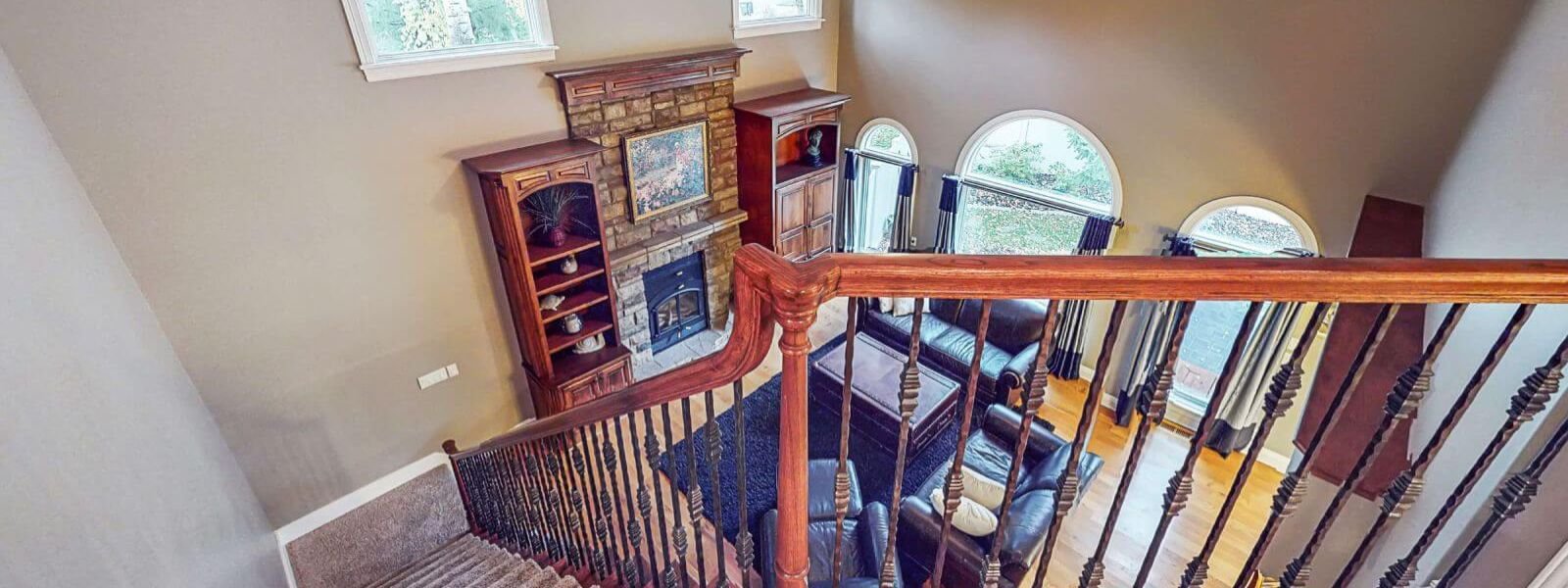
Why Perspective Can Make or Break a Real Estate Photograph
I think perspective is one of the easiest parts of real estate photography to underestimate.
A room can have beautiful finishes, great furniture and plenty of natural light, but put the camera in the wrong place and the photograph can suddenly feel awkward. The room hasn’t changed. The photograph has.
That’s what makes perspective so interesting to me. The camera isn’t simply recording the space. Its position changes the way the viewer understands the space. A few feet in one direction can change the relationship between the walls, furniture, windows and architectural features enough to make the entire photograph feel different.
The Camera Position Changes the Room
When I’m looking at a room, I don’t think there is one automatically correct place to put the camera.
The obvious position isn’t always the best one. Standing directly in the center of a room might give me a symmetrical view, but symmetry isn’t necessarily what makes that room interesting. Moving to one side might create a stronger relationship between the furniture and architecture. Moving closer might give an important feature more presence. Stepping back might reveal how two spaces connect.
The room is exactly the same in all three photographs. What changes is the viewer’s relationship to it.
That’s why I want to understand the room before I start shooting. I’m looking for the position that communicates something useful, not simply the position that allows me to fit the most into the frame.
Wider Isn’t Always Better
Real estate photography has an obvious temptation: show as much space as possible.
I understand why. A wide photograph can communicate the size of a room and give the viewer more information in a single frame. But there is a point where wider stops helping.
Push the perspective too far and the room can begin to look distorted. Furniture near the edges may stretch. Walls can start to feel unnaturally far apart. The proportions of the room become less believable.
That can actually work against the property.
I would rather show a room honestly and let its proportions feel natural than make it appear larger at the expense of how it actually feels. Sometimes the strongest photograph is the one that leaves a little more outside the frame because the things inside it have a clearer relationship.
Height Changes What the Viewer Notices
Perspective isn’t only about moving forward, backward or sideways.
Camera height matters too.
A camera positioned too high can change the way furniture and surfaces relate to one another. A lower position can give certain architectural elements more presence, while a higher position can sometimes provide a better understanding of the overall layout.
There isn’t a universal height that works for every room.
A kitchen may benefit from a position that gives the viewer a strong sense of the cabinetry, island and surrounding space. A living room may need something different. A bedroom may be more about proportions, windows and the relationship between the furniture and the walls.
The right height depends on what I’m trying to communicate.
Perspective Can Either Connect Spaces or Separate Them
This is particularly important in open-concept homes.
When several areas share one large space, the camera position can determine whether the photograph helps the viewer understand that relationship or makes the areas feel disconnected.
From one position, the kitchen, dining area and living room might read as one cohesive space. Move the camera and suddenly a wall, island or piece of furniture becomes a visual barrier.
That’s why I don’t just ask whether I can see the rooms.
I want to know whether I can understand how they relate to one another.
This becomes even more important when photographing a property where the flow between spaces is one of its strengths. A photograph should help communicate that flow rather than flatten it into a collection of unrelated rooms.
The Best Perspective Isn’t Always the Most Dramatic
There’s another trap that I think is worth avoiding.
A dramatic angle can certainly make a photograph more visually interesting, but real estate photography still has a job to do. The viewer needs to understand the property.
If an unusual camera position makes the room look impressive but makes the layout confusing, I’m not sure the photograph has accomplished much.
I’m more interested in perspective that feels intentional without calling attention to itself. The viewer should be able to understand the room naturally. They shouldn’t have to think about why the camera is sitting in that particular spot.
When the perspective is right, the photograph can feel almost obvious.
That’s usually a good sign.
Perspective Is Really About Giving the Viewer a Place to Stand
This is probably the simplest way I think about it.
When someone looks at a real estate photograph, they aren’t physically standing inside the property. The photograph has to give them a sense of what it might be like to be there.
Camera position becomes their point of view.
If the perspective feels natural, the viewer can begin to understand the scale, relationships and character of the space. If the perspective feels distorted or poorly chosen, they may still see everything in the photograph without really understanding what they’re looking at.
That’s why I think perspective can make or break a real estate photograph.
The camera doesn’t just decide how much of the room we see. It decides where the viewer gets to stand.
And that is a pretty important decision.
FAQs
What does perspective mean in real estate photography?
Perspective describes how the camera’s position changes the viewer’s relationship to the room, including the apparent size, depth and relationship between objects and architectural features.
Why does camera position matter so much?
Moving the camera changes the composition and the way walls, furniture, windows and other elements relate to each other in the photograph.
Does a wider lens always make a room look better?
No. A wider view can show more of a space, but excessive width can introduce distortion and make proportions feel unnatural.
How does camera height affect a real estate photograph?
Camera height changes the relationship between the viewer, furniture, surfaces and architecture. The appropriate height depends on the room and what the photograph needs to communicate.
Should real estate photographs always be taken from the center of a room?
No. The center can sometimes provide a strong composition, but another position may create a better relationship between the room’s important elements.
Why is perspective especially important in open-concept homes?
Camera position can determine whether connected spaces feel cohesive or visually separated, which affects how easily a viewer understands the home’s layout.
Can perspective make a room look larger than it really is?
Camera position and lens choice can influence how spacious a room appears. The goal should be to present the space attractively without creating a misleading sense of its proportions.
What is the best camera height for real estate photography?
There isn’t one universal height. It should be determined by the room, architecture, furniture and the composition being created.
Should real estate photography use dramatic angles?
Dramatic perspectives can be useful, but the photograph still needs to communicate the property clearly. A visually unusual angle isn’t automatically a better one.
How does perspective affect the way buyers understand a property?
Perspective gives the viewer a virtual place to stand. A thoughtful camera position can make the scale, layout and relationships between spaces easier to understand.
The perspective is the photograph
I think that’s what makes camera placement so interesting. The property doesn’t give me a photograph. It gives me a space, and I have to decide where the viewer should experience it from.
Sometimes that decision is only a few feet.
But those few feet can change everything.
If you’re preparing a property for market on Long Island and want to talk about how the photography can best present the space, I’m happy to have that conversation.