
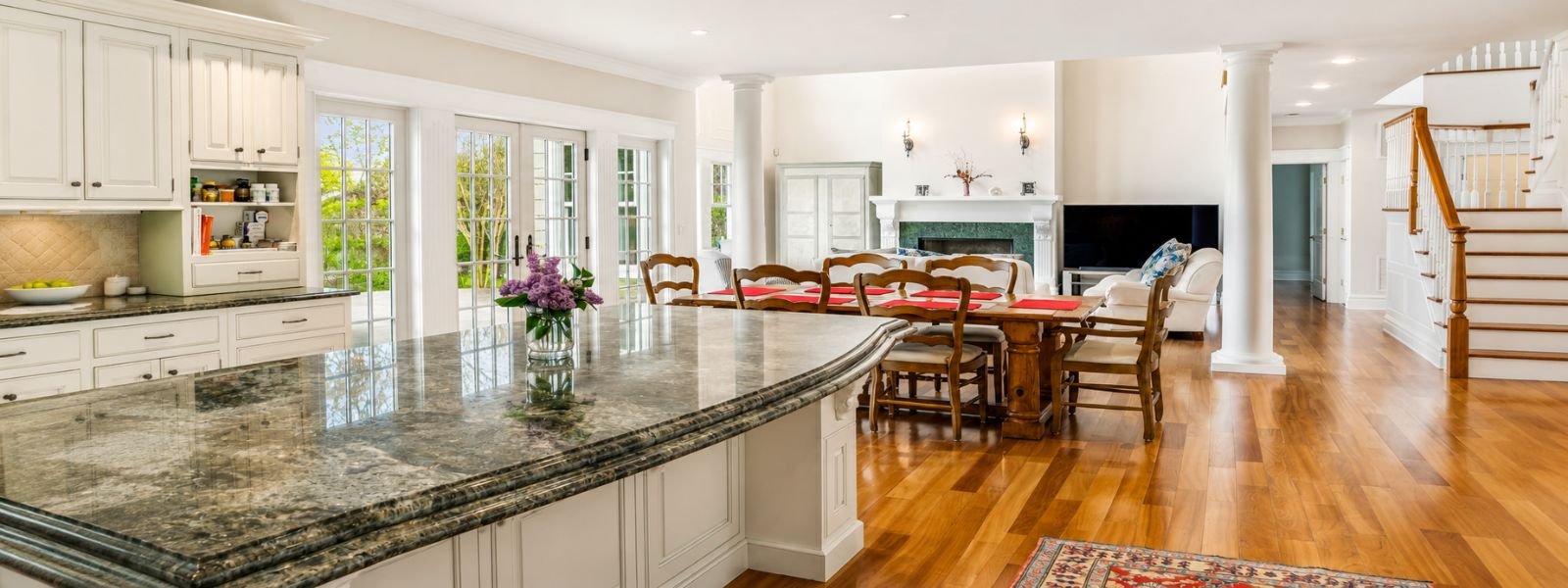
What Makes a Photograph Stop You From Scrolling?
I think the first challenge with a real estate photograph isn’t getting someone to appreciate it. It’s getting them to stop long enough to look at it.
That’s a different problem.
People move quickly through listings, social feeds and search results. A photograph might appear on a screen for only a moment before the viewer moves on. If the image doesn’t give them a reason to pause, all the work that went into creating it becomes irrelevant.
But I don’t think the answer is simply making a photograph bigger, brighter or more dramatic. Sometimes the photographs that make me stop are remarkably simple. Something about the composition, the light, the perspective or the subject creates just enough curiosity to make me want to look again.
The Photograph Needs Something to Notice
When I look at a photograph that makes me stop, there’s usually a clear visual reason for it.
Maybe there’s a strong architectural feature. Maybe the composition creates an interesting relationship between two parts of the room. Maybe the light is doing something unusual. Maybe the photograph captures a view that immediately makes me want to know what the rest of the property looks like.
What I don’t necessarily see is everything competing for attention at the same time.
That’s important because a photograph can contain plenty of information without giving the viewer a clear place to start. If the furniture, windows, artwork, lighting, architecture and surrounding rooms all demand equal attention, the eye has to work too hard.
A strong photograph gives me an entry point.
Curiosity Can Be More Powerful Than Showing Everything
There’s a temptation in real estate photography to explain the entire property in every frame.
I understand why. The goal is to give potential buyers information, and showing more can feel like you’re accomplishing more.
But sometimes I think showing just enough can be more effective.
A photograph of a kitchen might make me curious about the room beyond it. A view through a doorway might make me want to see where that hallway leads. A carefully composed shot of a living room might reveal just enough of the surrounding space to make me want to explore further.
The photograph doesn’t have to answer every question.
Sometimes it should create a reason to ask another one.
That’s particularly useful when the images are working as a collection. One photograph gets me to stop. The next one gives me more information. Then another shows me something I hadn’t noticed before.
The goal isn’t to make every image a dramatic event. It’s to keep the viewer interested enough to continue.
Perspective Can Create the Pause
A room photographed from an ordinary position can be perfectly accurate and completely forgettable.
Change the camera position and suddenly the same room can have a different visual character.
Maybe the composition creates a strong leading line. Maybe the foreground adds depth. Maybe the camera is positioned so two spaces appear connected. Maybe a familiar room looks different simply because the perspective gives an architectural feature more prominence.
This is one reason I spend time looking before I start photographing.
I’m not only asking, “What can I fit into this frame?”
I’m asking, “What would make me want to look at this frame?”
Those are two very different questions.
Light Can Give the Eye Somewhere to Go
Light is another reason a photograph can stand out without becoming overly dramatic.
A patch of natural light across a floor. A bright window at the end of a room. Soft illumination across a countertop. Shadows that create depth around architectural details.
Those moments can give a photograph a visual hierarchy.
The eye naturally moves toward certain areas of an image. Good lighting can help guide that movement without making the effect feel obvious.
I don’t think every photograph needs perfect, evenly distributed brightness. In fact, eliminating every shadow can sometimes make an image flatter and less interesting.
I’m more interested in light that helps the viewer understand what matters.
The Best Scrolling Images Don’t Always Look Like Advertisements
There’s a strange thing that happens when you try too hard to make an image attention-grabbing.
It starts looking like it is trying to get attention.
For real estate photography, I think that’s a problem. A property still needs to look believable. If the photograph becomes so exaggerated that it feels more like an advertisement for an imaginary house than a representation of the actual property, the image may stop being useful.
I’d rather create a photograph that makes someone pause because something about the space genuinely interests them.
That could be a beautiful view. A dramatic architectural detail. An unusually good composition. A room with an unexpected relationship to another space.
The subject provides the reason to stop. The photography helps the viewer see it.
A Strong First Photograph Can Change What Happens Next
When a listing contains a series of photographs, I don’t think every image has to do the same job.
Some images are there to establish the property. Others explain the layout. Some highlight details. Others provide context.
But there is usually an opportunity for one or two photographs to create that initial pause.
Those images don’t necessarily need to be the widest or most comprehensive. They need to make the property feel interesting enough that the viewer wants to keep going.
That’s a subtle distinction, but I think it matters.
If the first photograph simply documents a room, the viewer may scroll past it. If it gives them a reason to wonder what they’re looking at, they may stop.
And once they’ve stopped, you have their attention.
I Think the Best Scroll-Stopping Photograph Is Still About the Property
There are plenty of ways to manufacture attention.
You can exaggerate colors, push perspective, create unrealistic skies or add effects that make an image look dramatic for the sake of being dramatic.
I’m not particularly interested in that.
I’d rather find the thing that is already interesting about the property and photograph it in a way that makes that quality difficult to ignore.
Maybe it’s the architecture. Maybe it’s the light. Maybe it’s the view. Maybe it’s simply an unusually beautiful relationship between two spaces.
The photographer’s job, as I see it, is to recognize that opportunity and make a good decision about how to present it.
Because ultimately, I don’t want someone to stop scrolling because the photograph is loud.
I want them to stop because they saw something worth looking at.
FAQs
What makes a real estate photograph stop someone from scrolling?
A clear visual point of interest, strong composition, interesting perspective, effective lighting or a compelling architectural feature can give someone a reason to pause.
Does a real estate photo need to be dramatic to get attention?
No. A simple, well-composed photograph can be more effective than an exaggerated image if it gives the viewer something genuinely interesting to notice.
Why is the first listing photo so important?
The first image can determine whether someone becomes interested enough to continue looking through the rest of the listing.
Should the first photograph always show the entire room?
Not necessarily. A photograph that creates curiosity can sometimes be more effective than one that tries to explain everything immediately.
Can unusual camera angles make real estate photos more interesting?
They can, when the perspective serves the property and makes the composition stronger. An unusual angle by itself doesn’t automatically create a better photograph.
How does lighting affect attention in a photograph?
Light can create visual hierarchy by making certain areas brighter, adding depth or directing the viewer’s eye toward an important feature.
Should real estate photos be heavily edited to stand out online?
I don’t think they need to be. The property itself should provide the reason for attention, while thoughtful photography helps reveal what is already there.
What role does composition play in a scroll-stopping photograph?
Composition determines how the viewer’s eye moves through the image and whether there is a clear visual entry point.
Can a detail photograph stop someone from scrolling?
Absolutely. A distinctive architectural feature, material, view or design detail can be more visually compelling than another wide photograph of the entire room.
Does every listing photograph need to be attention-grabbing?
No. A listing works as a collection. Some photographs create interest, while others provide context, layout information and a fuller understanding of the property.
Give them a reason to stop
I don’t think stopping the scroll requires making a photograph louder.
It requires paying attention to what is actually interesting about the property and finding a way to put that quality in front of the viewer.
That’s where composition, perspective and light become more than technical decisions. They become tools for deciding what deserves someone’s attention.
If you’re preparing a property for market on Long Island and want to create photography that makes people want to keep looking, I’m happy to talk about how I would approach the property.