
The Details That Make a Property Photograph Interesting
When I walk into a property, I don’t only look at the big things.
Of course, I’m looking at the kitchen, the living room, the windows, the architecture and the overall layout. Those are the photographs that help someone understand the property. But I’m also looking for the smaller things that give the property some personality.
A particular light fixture. The texture of a countertop. A beautiful piece of millwork. The way a staircase meets the wall. A view through a window. Sometimes it’s something so subtle that you might walk past it without thinking about it.
Those details can make a difference because a good property photograph shouldn’t just tell me what a room contains. It should give me a reason to look at it.
Not Everything Interesting Is Big
Real estate photography naturally pushes us toward the largest elements in a room.
We want to show the size of the kitchen, the living area, the bedroom and the outdoor space. That’s important because buyers need to understand what they’re looking at. But size isn’t the only thing that makes a space interesting.
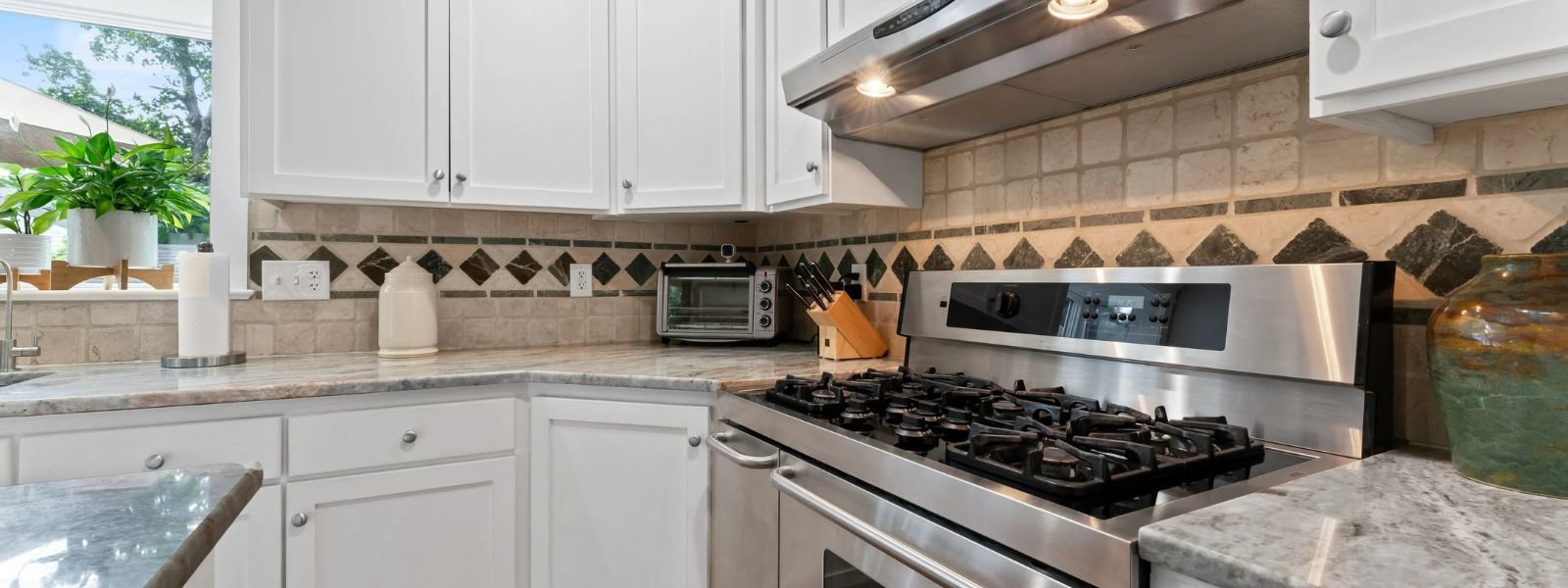
A room can have a relatively simple layout and still have details that deserve attention. Maybe the cabinetry has unusual hardware. Maybe there is architectural trim around the windows. Maybe the countertop has a material or edge detail that gives the kitchen a different character. Maybe the light coming through a particular window creates an interesting relationship with the room.
Those things can easily disappear in a wide photograph.
That’s where I think detail photographs earn their place.
Details Give the Viewer Something to Discover
A wide photograph gives you the basic information.
A detail photograph can give you something to investigate.
If I see a beautifully photographed kitchen, I understand the overall space. But if another photograph brings me closer to the cabinetry, countertop or lighting, I start noticing the decisions that went into the room.
That creates a different kind of visual interest.
I don’t think every detail deserves its own photograph. That would quickly become excessive. I’m looking for the details that actually contribute to understanding why the property is interesting.
The point isn’t to photograph everything that looks nice. It’s to recognize what is worth noticing.
Architecture Often Hides in Plain Sight
Some of the best details aren’t decorative at all.
They can be architectural.
A curved wall. A staircase. Exposed beams. Custom built-ins. Interesting ceiling lines. An unusual doorway. Trim that gives an older home its character. The way an addition connects to the original structure.
These elements can tell you something about the property that a collection of standard room photographs may not communicate.
I think that’s particularly important because architecture is one of the things that makes one property different from another. Furniture can change. Paint colors can change. Decorative choices can change.
The structure itself is part of what you’re photographing.
When I notice an architectural detail that gives a property some character, I want to consider whether it deserves a photograph of its own.
Materials Can Be More Interesting Than Decorations
I also pay attention to materials.
Stone, wood, tile, metal, glass and other finishes can give a room its visual character, even when the overall design is relatively restrained. Sometimes the texture or craftsmanship is much more interesting up close than it is from across the room.
A wide photograph might tell you that a kitchen has a stone countertop.
A thoughtfully composed detail photograph can show you why that countertop is worth noticing.
The same applies to flooring, cabinetry, hardware and other finishes. I’m not trying to turn the listing into an interior design catalog, but I don’t want interesting materials to disappear simply because they’re part of a larger room.
A View Can Be a Detail Too
When people think about detail photography, they often think about objects inside the house.
But a view can be one of the most important details a property has.
Maybe a bedroom looks toward a particularly beautiful stretch of landscape. Maybe the living room opens toward a pool or garden. Maybe the property has a relationship with the water, the trees or the surrounding neighborhood that isn’t obvious from a standard interior photograph.
The window itself may not be the subject.
What lies beyond it might be.
That is another reason I want to look carefully before I start photographing. Sometimes the most interesting thing in a room isn’t actually inside the room.
The Trick Is Knowing When to Stop
This is where restraint matters.
Once you start looking for details, you can find them everywhere. Every room has a handle, a fixture, a surface and a corner that could technically become a photograph.
That doesn’t mean they should.
I think a detail photograph has to earn its place in the final collection. It should reveal something about the property, reinforce its character or give the viewer a different way to appreciate the space.
Otherwise, it becomes visual noise.
The strongest listing galleries aren’t necessarily the ones with the most photographs. They’re the ones where each photograph contributes something.
Details Help Turn a Listing Into a Visual Experience
When I put all of this together, I think the value of detail photography is pretty simple.
The wide photographs establish the property. They show the rooms, the layout and the major spaces.
The detail photographs slow the viewer down.
They give someone a reason to look a little longer at the craftsmanship, architecture, materials or views that make the property different. They also help keep the photography from becoming a repetitive series of wide-angle room shots.
That’s what I’m looking for when I walk through a property. Not just the rooms that need to be photographed, but the things inside those rooms that make them worth photographing.
Sometimes the most interesting photograph of a property isn’t the one that shows the most.
It’s the one that makes you notice something you might have missed.
FAQs
What details are worth photographing in a real estate listing?
Architectural features, distinctive materials, craftsmanship, fixtures, views and other elements that contribute meaningfully to the property’s character can be worth highlighting.
Do detail photographs really matter in real estate photography?
They can add another layer to the listing by showing qualities that may disappear in wider photographs.
Should every attractive detail be photographed?
No. A detail photograph should contribute something meaningful to the overall presentation rather than simply add another image.
What is the difference between a room photograph and a detail photograph?
A room photograph establishes the space and its layout. A detail photograph focuses attention on a specific feature, material, architectural element or view.
Can architectural details make a property photograph more interesting?
Yes. Features such as millwork, staircases, beams, built-ins and unusual architectural elements can give a property visual character.
Should materials such as countertops and flooring be photographed separately?
When the material or craftsmanship is distinctive enough to contribute to the property’s presentation, a closer photograph can make sense.
Can a view count as a detail photograph?
Absolutely. A property’s relationship to its surroundings can be an important part of what makes it distinctive.
Do detail photographs make a listing look more luxurious?
Not necessarily. Their purpose isn’t to make a property appear more expensive. They help communicate the qualities that make the property interesting.
How many detail photographs should a listing have?
There isn’t a fixed number. The right amount depends on the property and how many details genuinely add something to the overall collection.
Why shouldn’t a listing have too many detail photographs?
Too many can make the gallery repetitive and distract from the larger spaces and layout buyers need to understand.
Look a little closer
I think the best detail photographs come from paying attention.
Before I start photographing, I want to understand what makes the property different. Once I see those things, I can decide which deserve to be part of the visual story and which are better left alone.
That is one of the reasons I enjoy real estate photography. The more carefully you look at a property, the more you tend to find.
If you’re preparing a property for market on Long Island and want photography that considers both the big picture and the details, I’m happy to talk about how I would approach it.