
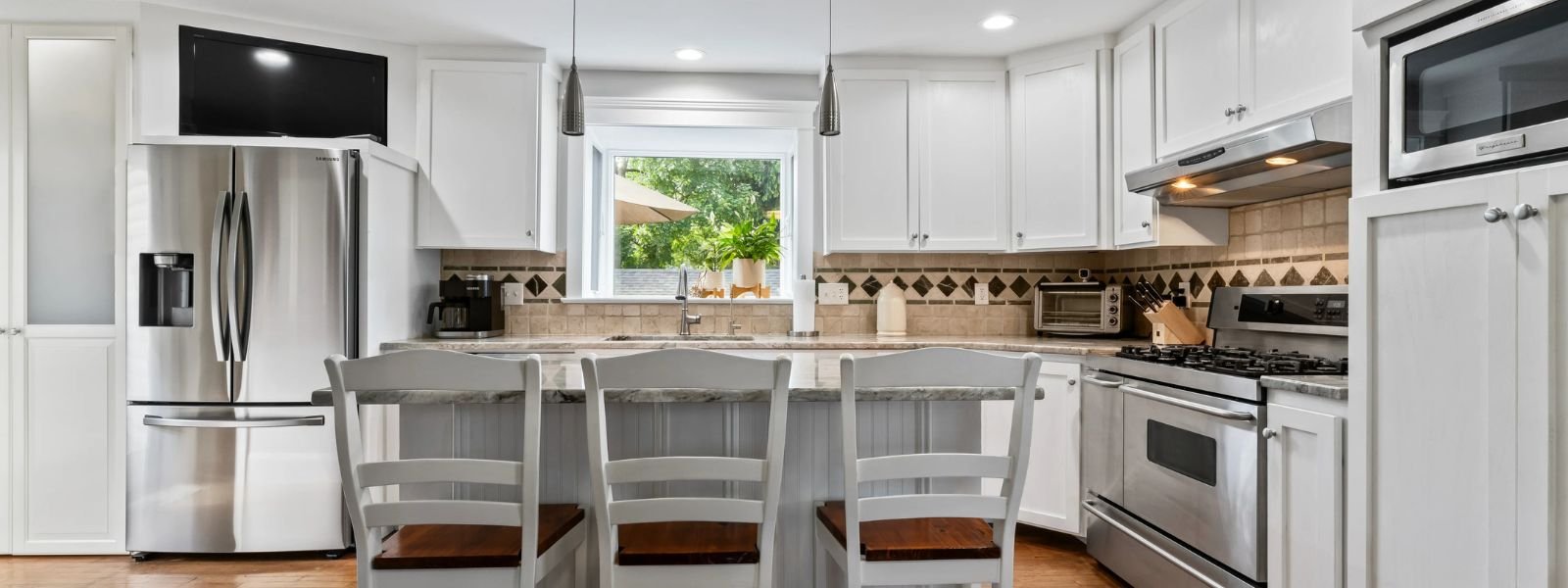
The Difference Between Taking a Picture and Making a Photograph
I think there is a meaningful difference between taking a picture and making a photograph, especially when you’re photographing a property.
Taking a picture can be as simple as pointing a camera at something and pressing the shutter. The room is there, the camera records it and you have an image. There’s nothing wrong with that. Sometimes that’s exactly what you need.
Making a photograph involves more decisions.
Where should the camera go? What should be included in the frame? What should be left out? How should the available light be handled? What is the most interesting part of the room, and how can the composition help the viewer notice it?
Those decisions happen before the shutter is pressed. And I think they’re a big part of what separates a photograph that merely documents a property from one that actually presents it.
The camera records what is in front of it. The photographer decides what matters.
A camera doesn’t know that the fireplace is the architectural feature that gives the room its character. It doesn’t know that the view through the windows is more important than the furniture. It doesn’t know that moving three feet to the left would create a much better relationship between the kitchen, dining area and living space.
It simply records what is in front of the lens.
That’s why camera position matters so much to me. A small change in where you stand can completely change the photograph. A doorway might become distracting instead of framing the room. A piece of furniture might block an important sightline. A beautiful architectural detail might disappear because the composition gives it nowhere to breathe.
The photograph starts taking shape when those decisions are made.
More of the room isn’t necessarily a better photograph
One of the easiest traps in real estate photography is believing that showing more automatically makes the image better.
It doesn’t.
A very wide photograph can certainly be useful when the goal is to establish the size and layout of a space. But if the lens is pushed too far, the room can start to look distorted. Furniture becomes stretched, walls begin to lean and the photograph can lose the sense of proportion that makes the space feel believable.
I would rather make a room feel natural than simply make it look as large as possible.
That sometimes means leaving something out. A photograph doesn’t have to contain every wall, every piece of furniture and every doorway to communicate what makes the room worth seeing. In fact, removing something from the frame can make the important elements much easier to notice.
That’s part of the difference between recording a room and composing one.
Light changes the way a space is understood
The same room can look completely different depending on how it is photographed.
Natural light can give a room warmth and depth. Interior lighting can add another layer. Shadows can provide shape and help the viewer understand the dimensions of a space. Highlights can draw attention to materials and surfaces.
The challenge is balancing all of those things without making the photograph feel artificial.
I don’t think every shadow needs to disappear or every window needs to look perfectly exposed. Real rooms have contrast. They have brighter areas and darker areas. When those relationships are handled well, the photograph can retain some of the character of actually being there.
Making the photograph means paying attention to that before the image is captured, rather than expecting editing to solve everything afterward.
A photograph should have a reason for being framed the way it is
When I look at a photograph, one of the things I’m interested in is where my eye goes first.
Maybe it’s the kitchen island. Maybe it’s a fireplace. Maybe it’s a wall of windows or a staircase with an interesting architectural detail. Whatever it is, the composition should give that element some importance.
That doesn’t mean every photograph needs a dramatic focal point. A simple bedroom may not have the same visual complexity as a kitchen or living room. But there should still be a reason the camera is positioned where it is.
If I can move the camera six feet in any direction and the photograph doesn’t really change, I probably haven’t made enough decisions yet.
The goal isn’t to make the photograph complicated. It’s to make it intentional.
This matters because real estate photography is presentation, not documentation
A listing needs accurate photographs. Buyers need to understand what the property actually looks like. But accuracy and presentation aren’t competing ideas.
I can show a room honestly while still thinking carefully about how it should be seen.
That’s where I think professional real estate photography earns its value. The work isn’t simply about having the right camera or knowing how to operate it. Those things matter, but they don’t decide what belongs inside the frame.
The photographer has to make judgments.
Sometimes the best photograph comes from moving closer. Sometimes it comes from stepping back. Sometimes the right decision is to wait for better light. Sometimes it means recognizing that a particular room doesn’t need five different angles because one strong composition tells the story more clearly.
Those decisions are easy to overlook because the finished photograph looks simple.
Good composition often does.
The best photographs can make the decisions disappear
I think that’s one of the things I appreciate most about photography.
When a photograph is working, you don’t necessarily notice all of the choices behind it. You simply look at the image and understand the space. The room feels balanced. The light makes sense. The important details get your attention without having to announce themselves.
That simplicity is deceptive.
A camera can take a picture of almost any room. Making a photograph means deciding how that room deserves to be seen.
For real estate, that distinction matters because the photograph isn’t just proof that the room exists. It’s the way someone who has never been there begins to understand it.
And I think that’s worth taking a little more time to get right.
FAQs
What is the difference between taking a picture and making a photograph?
Taking a picture can simply mean recording what is in front of the camera. Making a photograph involves deliberate decisions about composition, perspective, light and what deserves attention.
Why does camera position matter in real estate photography?
Camera position changes the relationships between walls, furniture, architectural features and rooms. Even a small adjustment can create a significantly stronger composition.
Does a wider lens always make a real estate photograph better?
No. A wider lens can show more of a room, but excessive width can create distortion and make the space feel unnatural.
Why is composition important in real estate photography?
Composition determines what the viewer notices and how the different elements of a room relate to one another within the frame.
Should real estate photos show every part of a room?
Not necessarily. Showing less can sometimes create a stronger image when it allows the most important features to receive more attention.
How does lighting affect a real estate photograph?
Lighting influences brightness, depth, color and the way materials and architectural features are perceived.
Does professional real estate photography require expensive equipment?
Equipment is important, but the decisions made about composition, perspective and lighting have a major influence on the final photograph.
Can editing turn a basic picture into a great photograph?
Editing can improve an image, but it can’t completely replace good decisions made when the photograph is composed and captured.
What makes a real estate photograph feel intentional?
There is usually a clear reason for the camera position, composition and treatment of light. The photograph feels considered rather than simply recorded.
Why does this distinction matter for listing photography?
A listing photograph is often the viewer’s first opportunity to understand a property. Thoughtful photography can communicate the space clearly while presenting it in its best and most accurate light.
The difference is in the decisions
I don’t think making a photograph has to mean making something complicated. Often, it means making a few good decisions and resisting the temptation to add more.
For me, that’s what I want from real estate photography. The property should still look like itself. The photograph should simply make it easier to see what is worth noticing.
If you’re preparing a property for market on Long Island and want to discuss how photography can present the space more thoughtfully, I’m happy to talk through what makes sense for the property.