
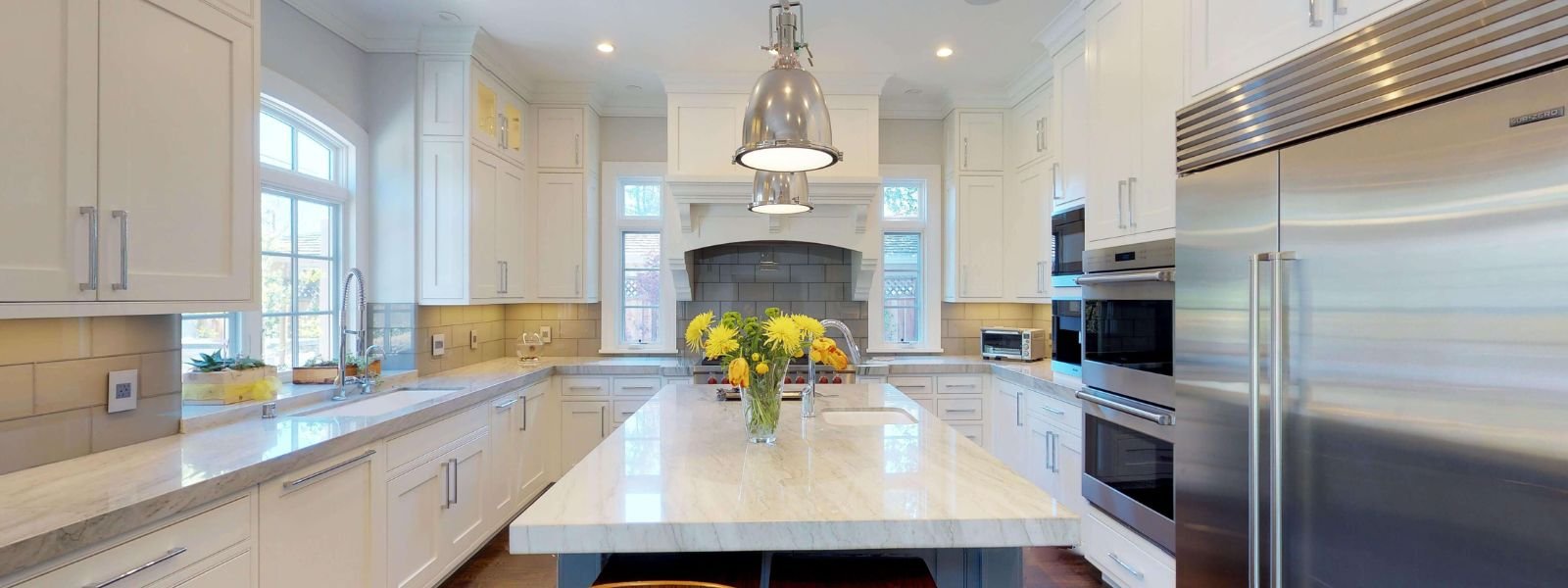
What Makes a Real Estate Photograph Feel Expensive?
There are plenty of real estate photographs that are technically good. They are sharp, well exposed and show the room clearly. But every once in a while, you see an image that feels different. The house may not be dramatically more expensive than the one next door, yet the photograph gives it a sense of polish and quality that makes you stop for a second.
I think that difference has less to do with the camera than most people realize. A photograph can accurately document a room without making the room feel particularly special. The more interesting challenge is figuring out what makes an image feel considered, balanced and, for lack of a better word, expensive.
That doesn’t mean making a property look like something it isn’t. In fact, I think the opposite is true. The best real estate photography doesn’t need to exaggerate the property. It needs to make good decisions about what to show, where to stand and what to let the viewer notice.
Expensive-looking photography starts with restraint
One of the easiest ways to make a real estate photograph feel less polished is to try to show everything at once.
A very wide angle can make a room look larger, but wider isn’t automatically better. When the camera is pushed too far, walls begin to stretch, furniture can look distorted and the composition loses some of its natural relationship to the room. You may technically be showing more square footage, but the photograph can actually feel cheaper.
I tend to think of the camera position as a decision about what deserves attention. Maybe it’s the relationship between a kitchen island and the cabinetry. Maybe it’s the way a living room opens toward a set of windows. Maybe it’s an architectural detail that gives the room its personality. If everything is equally prominent, nothing really is.
There is a certain amount of editing that happens before the photograph is ever taken. Not editing in Photoshop, but editing through the frame.
Light has to look believable
Lighting is another place where a photograph can quickly move from polished to artificial.
A room with beautiful natural light doesn’t necessarily need to be made dramatically brighter. Sometimes the temptation is to open up every shadow, brighten every corner and make every window look perfectly exposed. The result may be technically impressive, but it can also remove the feeling that you are actually standing in the room.
I like photographs where the light has some direction and the room still feels dimensional. Windows should look like windows. Lamps should feel like they belong in the scene. Shadows can be useful because they give objects shape and help the viewer understand where the light is coming from.
That balance matters because expensive-looking photography usually feels controlled without feeling manufactured. The viewer shouldn’t have to think about what the photographer did to the image. They should simply feel that the room looks good.
Composition is where the photograph starts to feel intentional
Two photographers can stand in the same room with the same camera and produce very different photographs.
The difference may come down to a few feet.
Move the camera slightly and the relationship between the sofa, doorway, windows and architectural features can change completely. A photograph can suddenly feel more balanced because the lines make more sense, the foreground isn’t crowded and the eye has somewhere natural to go.
This is one reason I don’t think every room should be photographed from the same height or with exactly the same approach. A kitchen has different visual priorities than a bedroom. A great architectural feature may deserve a tighter composition, while an open living area may benefit from showing how the spaces connect.
The goal isn’t to make every photograph look identical. It’s to make every photograph feel like it belongs to the property.
Details can make a property feel more valuable
There is also something interesting about what happens when you stop trying to show the entire room.
A carefully composed detail photograph can communicate quality in a way a wide shot sometimes can’t. The texture of a countertop, the craftsmanship of cabinetry, an interesting light fixture, architectural millwork or a particularly good view can give the viewer a better sense of what makes a property distinctive.
These images aren’t replacements for the wider room photographs. They work alongside them.
The wide photograph helps establish the space. The detail photograph gives the viewer a reason to look closer.
I think that’s part of what creates the feeling of a more expensive presentation. The property isn’t being treated like a collection of rooms that need to be documented. Someone has taken the time to notice what is actually interesting about it.
Expensive doesn’t mean exaggerated
There is a temptation in real estate media to associate quality with more. More brightness. More space. More editing. More dramatic skies. More visual effects.
I’m not convinced that more is the answer.
A property can look significantly more polished simply because the photography respects the architecture, uses light thoughtfully and avoids unnecessary distortion. The photograph can be beautiful without making a promise the property can’t keep.
That distinction becomes especially important as virtual staging, virtual twilight and other visual enhancements become part of modern property marketing. Those tools can be useful when they solve a genuine presentation problem, but the underlying photograph still needs to work.
For me, the idea of an expensive-looking photograph comes down to judgment. Where should I put the camera? What should I include? What should I leave out? How much should I enhance, and when should I leave something alone?
Those decisions are often subtle. But when they all work together, you can feel the difference.
And that’s probably what I like most about real estate photography. A camera gives you the ability to record a room, but the photograph still requires someone to make choices about how that room should be seen.
FAQs
What makes a real estate photograph look expensive?
Thoughtful composition, believable lighting, controlled perspective and attention to architectural details can make a photograph feel more polished.
Does expensive-looking photography require expensive equipment?
Not necessarily. Equipment matters, but decisions about camera position, composition and lighting have a major influence on the final image.
Does using a wider lens make a property look more expensive?
Not automatically. An excessively wide perspective can distort rooms and furniture. The better approach is to use the perspective that presents the space naturally.
Should every room be photographed from the same height?
No. Different rooms have different visual characteristics, so camera height and position should respond to the architecture and composition.
Why are detail photographs important in real estate photography?
They can draw attention to materials, craftsmanship, fixtures and architectural features that might disappear in a wider photograph.
Should real estate photos be extremely bright?
Brightness alone doesn’t create quality. Keeping natural light, highlights and shadows believable can help a photograph retain depth and dimension.
Can virtual enhancements make a photograph look more expensive?
They can improve certain presentations when used appropriately, but enhancement should support the property rather than misrepresent it.
Is expensive-looking real estate photography the same as making a home look luxurious?
No. A polished photograph can make a property feel well presented without suggesting that the property is something it isn’t.
Why can two photographs of the same room look completely different?
Camera position, lens perspective, composition, lighting and what the photographer chooses to include can dramatically change how the room is perceived.
Does good real estate photography require every part of a room to be visible?
No. Showing less can sometimes create a stronger composition when it allows the most important architectural or design elements to receive attention.
A natural next step
When I approach real estate photography, I’m thinking about more than getting a complete set of rooms photographed. I’m thinking about how those images work together to present the property honestly and thoughtfully.
If you’re preparing a Long Island property for market and want to talk through what kind of visual presentation makes sense, I’m happy to have that conversation.